


The Birth of Métis Life
In recognition of National Indigenous History Month and National Indigenous Peoples Day, qathet School District is highlighting the importance of centring Indigenous voices, knowledge, and lived experiences in student learning. A longstanding Grade 4 outdoor learning experience has been recently reimagined through this lens. Formerly known as Voyageur Life, the newly redesigned Métis Life program places Métis perspectives and lived experiences at the centre of learning while still connecting students to key curriculum topics.
Developed through collaboration between Métis community members, qSD Indigenous Education staff, and the local Métis charter community, the program offers students hands-on experiences including canoeing, tipi teachings, music, dance, storytelling, and learning on the land. The redesign has been positively received by students, staff, and community members, with many describing it as a more meaningful way to share Métis culture and history.
We had the opportunity to sit down with District Principal of Indigenous Education, Jessica Johnson, to learn more about the inspiration behind the shift, why Métis-centred learning matters, and the experiences students take part in throughout the program.
Read the Q&A below:
Q: Can you share a little about what inspired the shift from Voyageur to Métis Life and why it felt important to redesign and rename the program?
A: The Voyageur program was originally started by one of our excellent outdoor educators in the district. It aligned well with the Grade 4 curriculum, especially in social studies around the interactions between First Peoples and European settlers. While this connection was a strong foundation, there was a growing opportunity to include more Métis perspectives within the program.
In 2020, a team came together to review the curriculum and intentionally begin integrating more Métis voice. Through building relationships with the local Métis charter community, the program continued to evolve. This included adding elements such as a tipi, highlighting Métis staff, and weaving more Métis knowledge, experiences, and identities into the learning.
The Voyageur program previously offered more of a theatrical experience for students, which was a lot of fun for them. At the same time, there was a shared interest in shifting the focus so that Métis perspectives were not just included, but centred.
This winter, Métis community members, qSD Indigenous Education staff, and members of the local charter community came together to reflect on the program and consider what meaningful change could look like. The result was a reframing of the Voyageur program.
Rather than being Voyageur-centred with Métis perspectives woven throughout, it is now Métis-centred, with the Voyageurs included as part of the story. It was really important to have our voices heard and be central in that program.
Q: Why is it important for students to begin learning about Métis culture and perspectives at this age?
A: Learning about Métis culture and perspectives at a young age is important because there are still many misconceptions about who Métis people are and what it means to be Métis.
The Métis were only recognized in the Constitution in 1982, and as one of the three distinct Indigenous peoples in Canada, their history and identity are still widely misunderstood. There is often confusion about Métis identity, with assumptions that it is simply based on mixed ancestry. In reality, Métis identity is rooted in a shared history, culture, and community that emerged during a specific post-contact, pre-colonial period in what is now Canada.
Introducing these learnings early helps challenge common misunderstandings and supports students in building a more accurate and respectful understanding of Métis people and their place in Canadian history.
Q: What are some of the experiences students get to participate in?
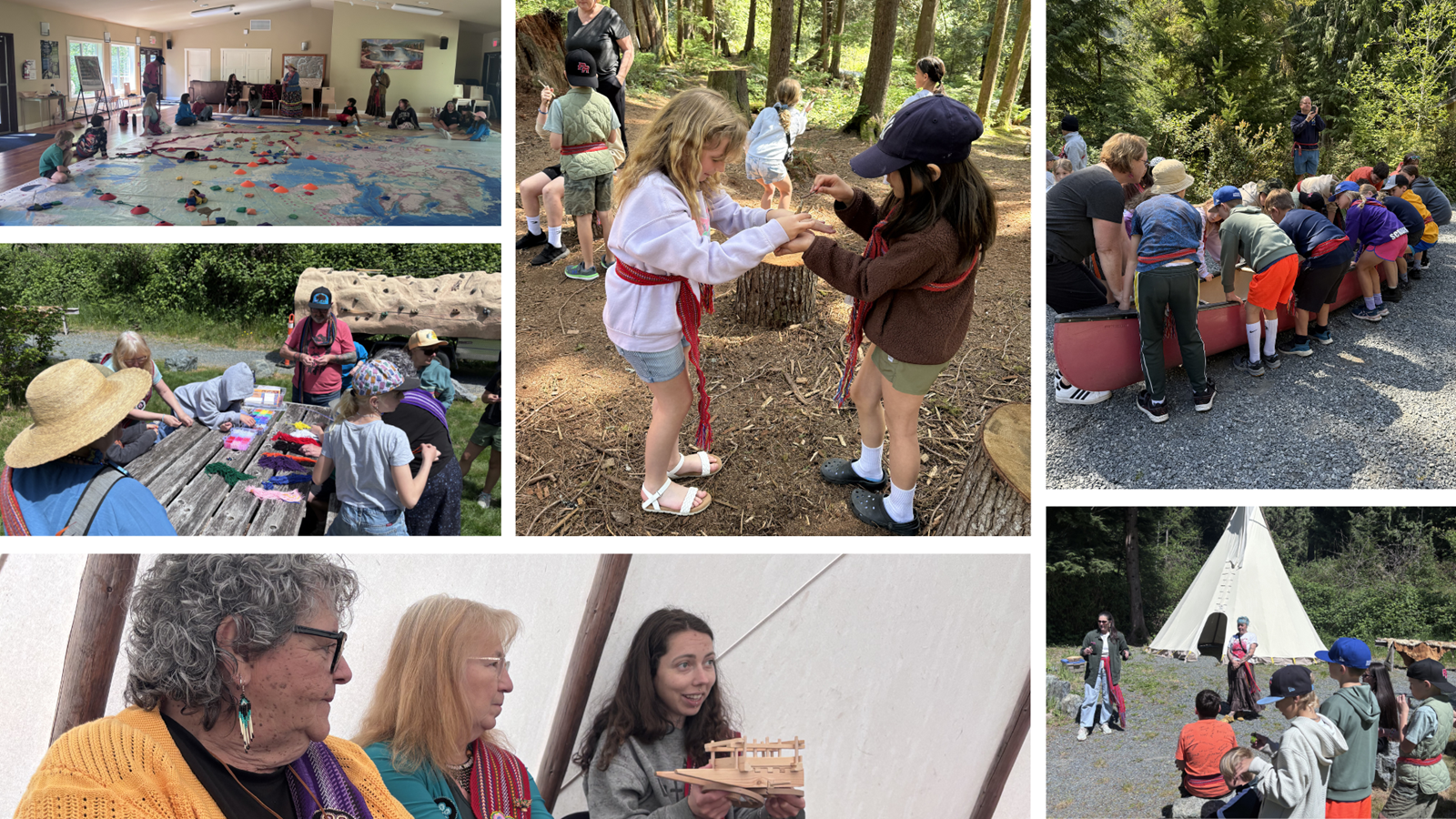
A: When the students arrive at the Outdoor Learning Centre, they are first welcomed into a gathering space and introduced to Métis identity using a large First Peoples map of Canada.
They learn about how Métis identity is rooted in a shared history, languages, and geography rather than colonial borders. This activity also connects to history-based curriculum topics such as the fur trade and resource use.
From there, students move outdoors to learn about portaging and the use of the “lobstick”, a traditional navigational tool. They carry a canoe along a short route while learning how Métis and other Indigenous peoples navigated and lived on the land. Along the trail, they also explore teachings such as the “giving tree,” which emphasizes the importance of reciprocity and explains how families shared and cared for resources within the land.
The day includes time for games in the forest, a shared lunch, making bannock over a fire (though the fire ban cancelled that this year and bannock had to be made indoors), and cultural experiences such as Métis music and dancing.
In the afternoon, students rotate between canoeing and learning tipi teachings, which are very important parts of the Métis culture.
To close the day, each student creates a memory keychain with beads and yarn to help them take away a personal reminder of what they’ve learned and experienced throughout the program.
Q: What do you hope students remember most after taking part in the program?
A: I just want kids to be out on the land and having fun and learning about the beauty, the richness, the diversity of Indigenous peoples, and more specifically, to have a better understanding of who the Métis people are.
Q: What has the response been like from staff and students since the redesign of the program?
A: The response from students, staff, and the broader Métis community has been positive since the program was redesigned.
Although the program looks a little different, it remains a playful and engaging experience for students. They have continued to enjoy favourites such as canoeing and outdoor activities, while also taking away a deeper understanding of Métis culture and history. I’ve heard parents say that their kids returned home excited to talk about what they learned!
As a Métis person, the redesign for myself and other Métis staff has made us feel lighter. It feels much better to be telling our own story instead of trying to fit ourselves into a story being told about us.
Seeing Métis voices and experiences placed at the centre of the learning has been deeply impactful.
Métis Mythbusting
- The Métis are one of the three distinct Indigenous groups in what is now known as Canada (the others are First Nations, and Inuit).
- Métis are often defined by their mixed European and First Nation ancestry, but mixed ancestry alone doesn't make someone Métis. Métis people need to trace their ancestry to the historic communities where ethnogenesis occurred.
- qathet Regional District is home to one of the 39 Métis chartered community in BC, although this region and the territories west of the Rockies are not part of the Métis homelands. We recognize and express our gratitude to ɬaʔamɩn as the original caretakers of this beautiful place.
- Métis people have a distinct language, culture, and governance from both their European and First Nations ancestors.
Learn more about the Métis here.